
Designing a true scale, walkable Prototype of a passenger Drone for an enactment study
In the winter semester 2022/23, an interdisciplinary team at the Technical University of Applied Sciences Ingolstadt developed a mid-fidelity prototype of a passenger drone. The goal was to create a walk-in, 1:1 scale model intended to serve as the basis for a later enactment study.
The use case was clearly defined: four seats, a 30-minute flight from Ingolstadt North to Munich Airport. The goal was not an aerodynamically refined product, but a user-centered experiential space that would enable the exploration of passenger behavior, interior decisions, and UI concepts in a physical context. A particular focus was placed on accessibility and addressing skepticism and fear of flying.
The project was divided into two closely interlinked teams: the Prototype Team (physical construction of the drone) and the UI Team (digital screens for onboard displays, iPad, and mobile app). I took on the role of Project Manager and coordinated both teams throughout the entire semester.
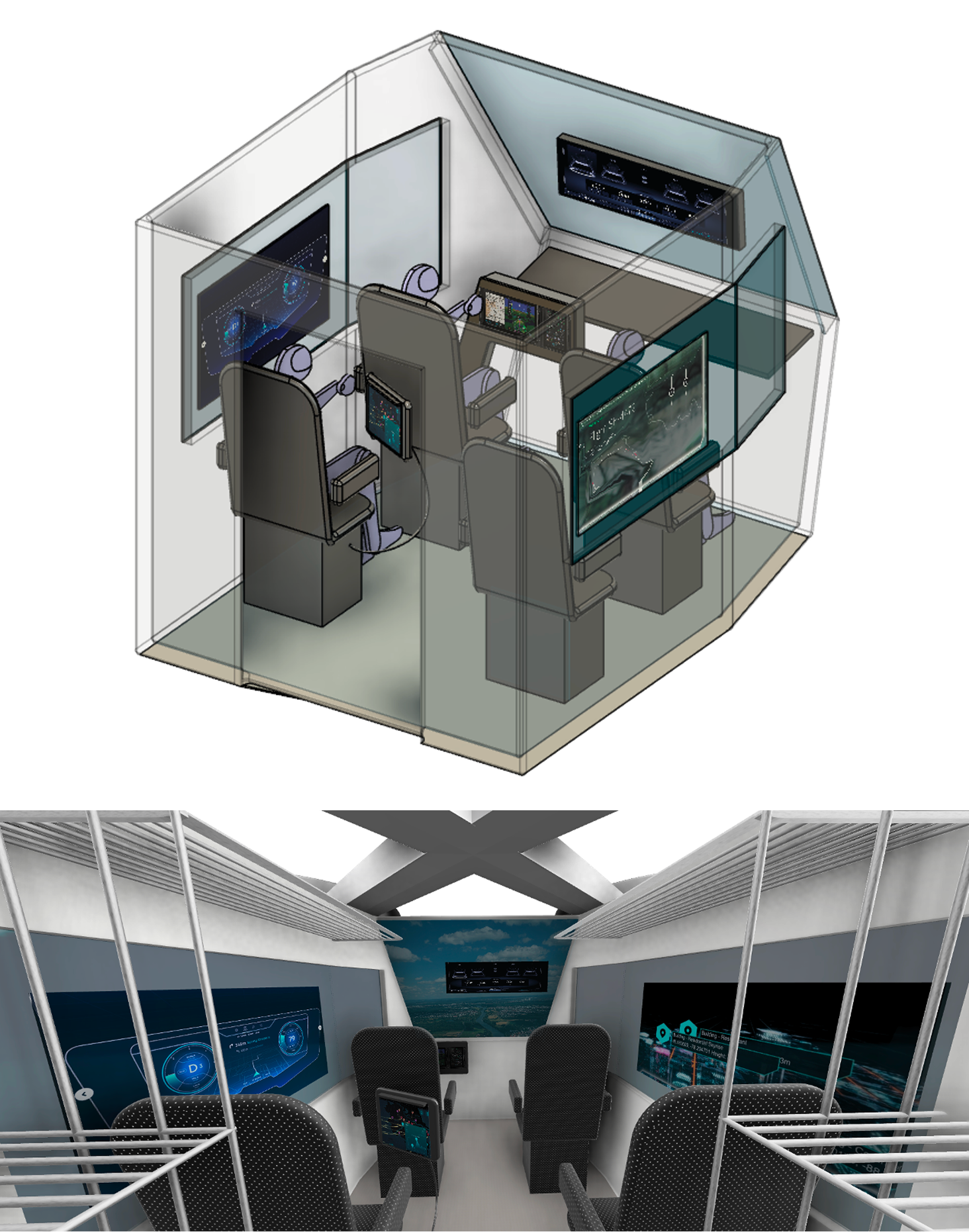
From the outset, the project was complex: two independent teams, a tight budget, no experience with physical prototyping, and a fixed deadline. My task was to structure communication, processes, and resources in such a way that both streams would converge into a functioning overall product.
We worked in weekly sprints with clearly defined sprint goals. I led and prepared all weekly meetings, which were structured into sprint review, team discussion, and sprint planning. For each meeting, I created agendas and templates in advance to ensure efficiency and traceability using Confluence and Jira.
The team consisted of UX design master’s students, divided into two groups. The Prototype Team was responsible for construction, material procurement, and physical assembly of the drone model. The UI Team designed all digital interfaces: widescreen display, iPad interfaces and the mobile booking app. Both teams worked in parallel but required continuous alignment on dependencies such as display placement, lighting design, and usage scenarios.
I took full responsibility for budgeting: from initial cost estimation to multiple iterative budget lists and final purchasing decisions. Limiting factors included not only the overall budget but also weight constraints for transport, fire safety requirements (B1 standard), workshop access, and delivery times.
Material decisions, such as choosing ITEM profiles as the main structural framework, were evaluated and documented together with the team.
Regular coordination with supervisor Patricia Appel and Prof. Andreas Riener (THI) ensured that project progress, scope changes, and decisions remained transparent. I prepared all status updates for external stakeholders and represented the team in cross-project formats.

- Jira and Confluence for sprint tracking, backlog management, and documentation
- Figma and FigJam for UI design, research documentation, and team alignment
- Fusion 360 for 3D modeling and dimensional validation of the physical prototype
15+ scientific papers · Analysis software Atlas.ti · Timeframe 2013–2022
The research process began with an extensive literature review on passenger drones and eVTOLs. Over 111 documents from Google Scholar (German and English, 2013–2019) were analyzed using the qualitative content analysis software Atlas.ti.
The findings were categorized into four thematic clusters: expected benefits (economic, ecological, societal), potential problems (legal aspects, safety, human factors), anticipated barriers (technical, acceptance-related, regulatory), and proposed solutions.
Particularly relevant: an international study with 100 participants showed that 45–58% demonstrated a willingness to pay above €0, with a median of €0.65/km for multicopters. A VR study (n = 294) highlighted the influence of risk perception and prior experience on acceptance.
Qualitative · multiple participants · in-person · dot voting, journey mapping, drawings
Based on the literature insights, we conducted a structured focus group. The session was divided into three phases:
Key findings:
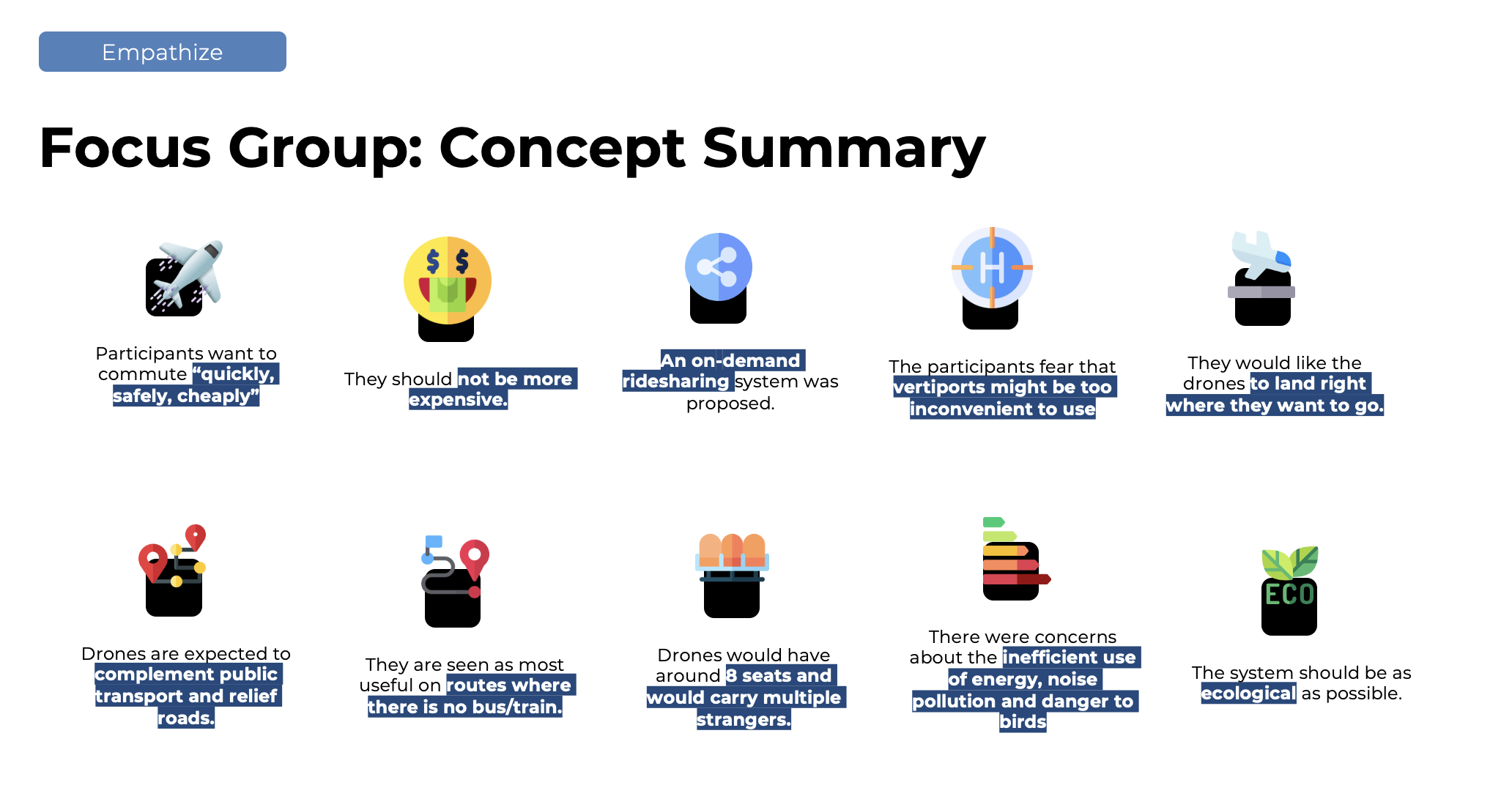
The primary need is safety, ahead of comfort, speed, or price. Participants expressed a preference for an on-demand ride-sharing system that complements public transport. Vertiports should be located as close as possible to the destination.
For the interior, priorities included panoramic glazing, modular work surfaces, comfortable seating, and accessible design. The booking process should be fast and fully executable via a mobile app.
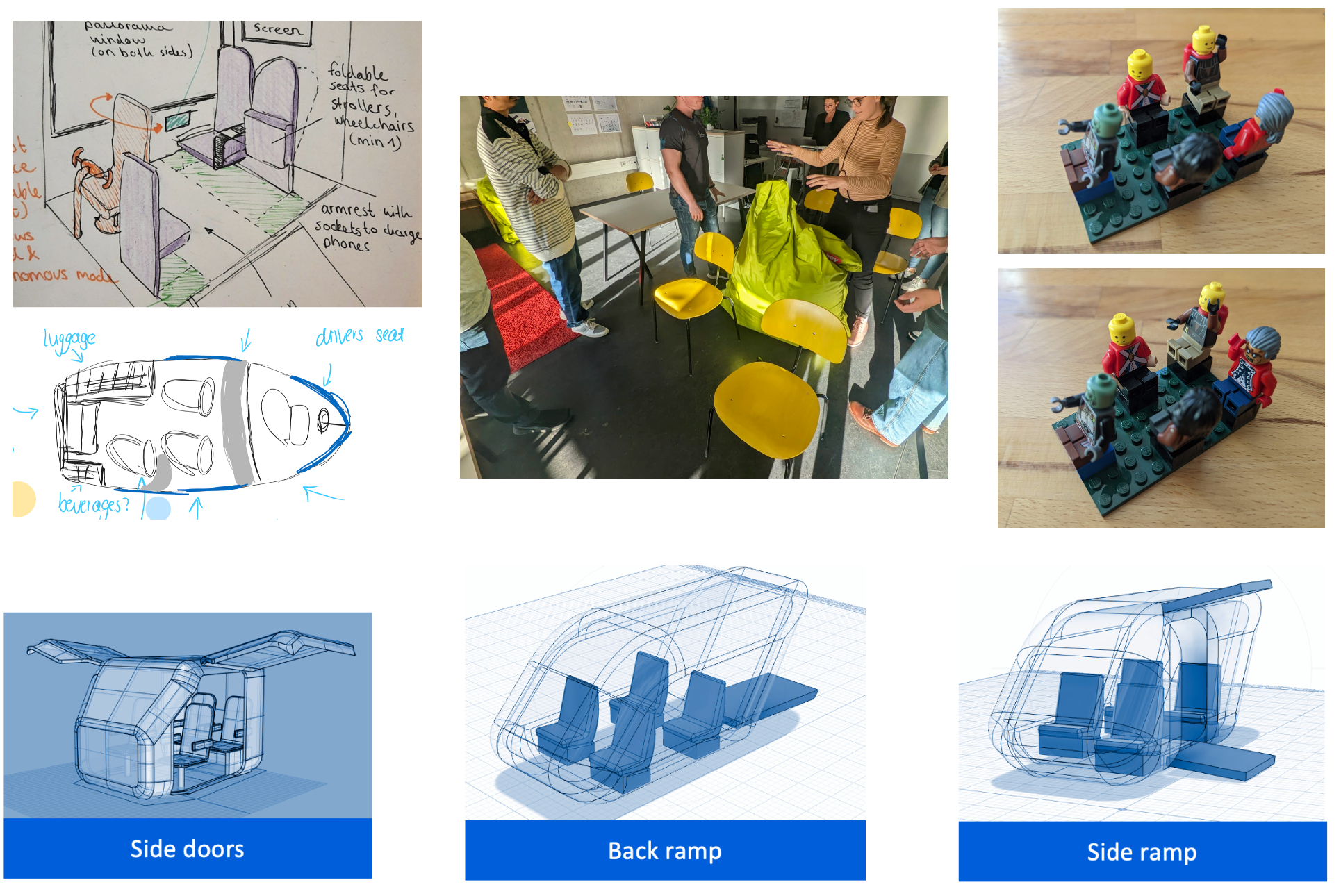
The drone frame was constructed using ITEM profiles, an industrial aluminum profile system that proved to be lightweight, flexible, and workable within the THI workshop.
The final model accommodated four passengers in a face-to-back seating arrangement (preferred due to motion sickness considerations and pilot placement), was designed to be wheelchair accessible, and featured two ramp doors (side and rear) for maximum flexibility in study setups.
Integrated elements included LED light strips (Twinkly), a projector for windshield simulation (Microsoft Flight Simulator), a front-facing widescreen display, window displays, and iPad mounts for each seat.
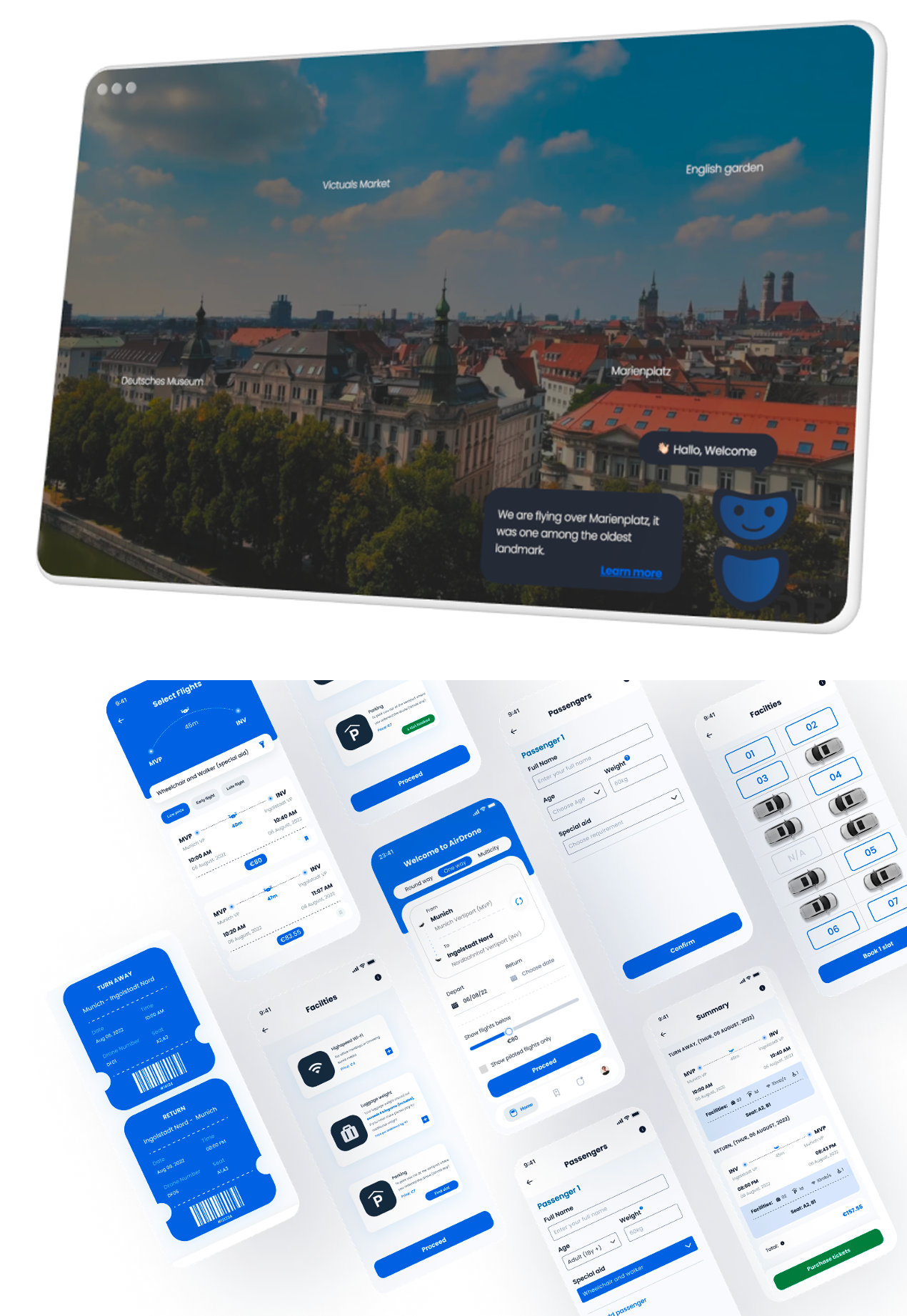
The UI team designed a complete digital ecosystem across three platforms:
Using a MoSCoW prioritization framework, must-haves such as emergency guidelines and flight information were clearly distinguished from nice-to-haves such as AR technology and a smart assistant.
The design system included 25+ widescreen components and 50+ components for mobile and tablet interfaces, with blue as the primary color and Poppins as the typeface.
The UI was complemented by “Dronie,” a virtual assistant on the window display that provided passengers with information about overflown locations and was specifically designed to support users with fear of flying.
The final product was a fully walkable, mid-fidelity drone prototype that covered all major dimensions of the passenger experience: physical interior, digital interfaces, and immersive environment.
The prototype was presented as part of the final presentation at THI and was ready for the next step: a planned enactment study with real participants. It was developed further (FeliFly) and is currently used for research purposes at THI. See: https://hcig.thi.de/labs/passenger-drone/
The biggest challenges of the project were changing requirements due to technical constraints from other teams, a tight budget requiring multiple iterations of procurement planning, and the need to acquire entirely new skills such as physical prototyping, material handling, and construction logic.
For me personally, AIR was the most demanding project management experience of my studies: coordinating two interdependent teams, managing budget and procurement, handling stakeholder communication, and leading weekly meetings, all within a project that ultimately became physically tangible.
Read more Here:
Research using using the further developed prototype (FeliFly):
https://www.researchgate.net/publication/374000931_Annoyed_of_Traffic_Jams_Fly_with_FeliFly
https://dl.acm.org/doi/10.1145/3581961.3609843
Local news article about the project: